Keywords
metacarpal hand - toe-to-hand - amputation
Introduction
Metacarpal hand is one of the most devastating upper-limb injuries, significantly
impairing work and daily activities. As one of the main “social” anatomical areas
of the body, this hand injury poses an esthetic problem that can stigmatize patients.[1]
[2]
The management of metacarpal hand raises several questions, and their resolution is
mostly guided only by recommendations from experienced authors, since there are no
large studies with a high degree of evidence. Surgeons must consider the urgent treatment,
the conditions for a satisfactory deferred surgery, and the surgical indication starting
at the first contact; in addition, it is critical to know the different alternatives
and to never forget that the reconstruction plan must consider the patient's requirements.[1]
[2]
[3]
[4]
[5]
[6]
Case Presentation
A 56-year-old male patient with no relevant history was referred for a consultation
after regularization and direct closure of stumps from the second, third, and fourth
fingers at another service, as well as the disarticulation of the fifth finger after
a traumatic right-hand amputation due to an incised and blunt mechanism (lawnmower)
([Figures 1] and [2]).
 Fig. 1 Photograph of the patient during the first consultation at our service. He presents
an acceptable stump for separate transfer of two toes to the radii of the third and
fourth fingers.
Fig. 1 Photograph of the patient during the first consultation at our service. He presents
an acceptable stump for separate transfer of two toes to the radii of the third and
fourth fingers.
 Fig. 2 Radiograph before the first transfer.
As a right-handed manual worker, the patient required a functional clamp with sufficient
gripping force; as such, the restoration of a three-finger gripper was considered
a reasonable goal.
The first toe-to-hand transfer was performed 10 months after the accident. The flap
was obtained by one of the surgical teams, who dissected the first dorsal metatarsal
artery up to its origin at the pedis artery and continued along the distal section
of the artery. Two dorsal veins were located and dissected, in addition to the plantar
collateral nerves and the flexor and extensor tendons. ([Figure 2]). Disarticulation was carried out at the level of the metatarsophalangeal joint,
sparing the metatarsal head. A second surgical team exposed the amputation stump,
the flexor and extensor apparatus, the collateral nerves, and two subcutaneous receptor
veins and the radial artery at the back of the hand. Toe osteosynthesis was performed
on the remnant of the proximal phalanx of the third toe using wire cerclage. Next,
the tendinous suture of both the flexor and extensor apparatus was performed. Finally,
end-to-end microsurgical anastomoses of the pedis artery to the radial artery, of
both dorsal veins of the foot to those of the dorsum of the hand, and of both plantar
collateral nerves to the remnants of the collaterals of the third finger were performed
([Figure 3]).
 Fig. 3 Intraoperative detail during the harvesting of the second toe of the left foot. The
dissection of the superficial venous network on which the venous drainage of the flap
will be based is on the left side. The dorsal vein, first dorsal metatarsal artery
(red vessel loop) and extensor tendon (yellow vessel loop) are at the right side of
the image.
Fig. 3 Intraoperative detail during the harvesting of the second toe of the left foot. The
dissection of the superficial venous network on which the venous drainage of the flap
will be based is on the left side. The dorsal vein, first dorsal metatarsal artery
(red vessel loop) and extensor tendon (yellow vessel loop) are at the right side of
the image.
The rehabilitation process and occupational therapy began after waiting a month to
achieve adequate vascular, osteosynthesis and tenorrhaphy stability. Four months after
the surgery, the patient had achieved 80° of flexion of the metacarpophalangeal joint,
a useful grip, adequate handwriting, and the ability to grasp objects with a moderate
weight ([Figures 4] and [5]).
 Fig. 4 Outcomes two months after the first transfer.
 Fig. 5 Radiograph after the first transfer.
At the tenth month posttransfer, skin excesses at the junction of the proximal phalanx
to the transferred finger were remodeled. After 17 months, upon patient request, the
second transfer was carried out. Following the same procedure, the second toe of the
right foot was transferred to the stump of the proximal phalanx of the fourth finger
of the right hand. As a technical modification, arterial dissection was limited to
the dorsum of the foot and performed only up to the first dorsal metatarsal artery.
The arterial supply was based on this vessel, with an anastomosis to the third palmar
metacarpal artery ([Figure 6]). As in the first transfer, the rehabilitation process began one month after surgery,
and the skin at the level of the proximal fourth phalanx was remodeled twelve months
later.
 Fig. 6 Images of the transfer of the second toe from the right foot to the fourth radius.
At the top, the figure shows (up) the free flap and its artery (A), the planar nerve (N), and the dorsal vein (V).
(Down) Image from the transfer after arterial anastomosis.
Fig. 6 Images of the transfer of the second toe from the right foot to the fourth radius.
At the top, the figure shows (up) the free flap and its artery (A), the planar nerve (N), and the dorsal vein (V).
(Down) Image from the transfer after arterial anastomosis.
After 5 years of follow-up, the patient presented a functional 3-finger gripper with
adequate handwriting and flexion capacity of 80° in both metacarpophalangeal joints.
The grip strength is of 37 kg in the left (unaffected) hand and of 12.2 kg in the
right hand. The two-point tactile discrimination is of 6 mm and 10 mm for both ulnar
and radial collateral nerve regions from the third and fourth fingers respectively.
The patient has no gait disturbances ([Figures 7] and [8]).
 Fig. 7 Outcomes five years after the second transfer.
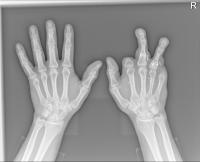 Fig. 8 Radiograph five years after the second transfer.
Discussion
The most accepted definition for the term metacarpal hand was proposed by Wei et al.[5] in 1997. According to these authors, this term describes a hand that has suffered
a traumatic amputation of the triphalangeal fingers, not maintaining a minimum acceptable
length for any of them, with or without thumb involvement. In addition, these authors
proposed that a metacarpal hand with an adequate thumb length (usually intact) would
be further classified as “type I”; in contrast, a “type II” metacarpal hand presents
an inadequate thumb length. The minimum acceptable length in an amputation spares
at least the proximal half of the proximal phalanx in triphalangeal fingers and the
complete first phalanx of the thumb.[1]
[2]
[4]
[5]
[6] Each type is subdivided into different categories depending on the level. In type
IA, amputation occurs distal to the metacarpophalangeal joint. In type IB, amputation
occurs at the metacarpophalangeal articular surface. In type IC, amputation is at
the metacarpal itself. In type IIA, thumb amputation is distal to the neck of the
first metacarpal bone. In type IIB, it occurs at the level of the metacarpophalangeal
joint, with no injury to the articular metacarpal cartilage; in type IIC, there is
cartilage injury, or the amputation occurs at the first metacarpal bone. In type IID,
the trapeziometacarpal joint is destroyed.[2]
[4]
[5]
[6]
[7]
The reconstructive process aims to obtain a hand capable of gripping and grasping
objects, with virtually normal sensitivity and esthetics.[1]
[2] This requires a thumb with an acceptable opposing function, or at least fixed in
abduction and opposition to function passively when grasping objects. In contrast,
the restoration of a strong gripper requires the restoration of two contiguous digits
opposable to the thumb. These principles can guide the selection of the most appropriate
reconstructive procedure. However, this decision must be adapted to the patient's
occupation, daily activity, degree of motivation, and esthetic concerns.[1]
[2]
[3]
[4]
[5]
[6]
The initial care should focus on tissue preservation and skin coverage, but the former
cannot be conditioned by the latter. An effort is made to preserve certain structures
that will condition the reconstruction outcome, as well as to lower the morbidity
at the donor area,[2] including neurovascular structures, metacarpophalangeal joints, the trapeziometacarpal
joint, and thenar muscles. If any of these structures were vital, their regularization
to enable the coverage with local tissues would be contraindicated. Most authors[1]
[4]
[5] prefer a coverage with a pedicled inguinal flap, a fast and safe technique, with
the disadvantage of requiring a second time for pedicle section and flap remodeling,
in addition to keeping the hand joined to the inguinal region. Other authors[1] advocate the use of free flaps, such as those from the gracilis muscle, a more complex
technique but with none of these disadvantages.
Replantation viability must be assessed after debridement. It is not uncommon for
the viability to be low due to the highly-destructive mechanisms causing these injuries.
If any of the fingers is viable, a heterotopic replantation should be considered.[3] The next alternative is toe-to-hand transfer; although it can be performed in an
urgent setting, it is mostly deferred and performed with adequate surgical planning
in a referral center.
The classic recommendation regarding the timing of the free transfer is when wound
healing is complete, with no infection or other concomitant complications.[2] In contrast, delaying the definitive reconstruction helps to detect non-viable structures
spared by the initial urgent surgery, either due to lack of vitality or functional
impairment.[8] However, recovery time increases significantly. Some authors[1]
[2]
[8]
[9] recommend immediate transfer if replantation is not possible. Several studies[1]
[2]
[8]
[9] have not detected an increase in the rates of complications, revision, or reconstruction
failure. However, since these reports are from case-control studies based on small
series, their results should be considered with caution.[10]
The next question is the number of fingers to transfer. This is determined by the
number of fingers required to achieve the reconstructive goal: a strong, sensitive,
functional, and esthetic three-finger gripper. The main limitation is determined by
the morbidity of the donor area. For the type-I metacarpal hand, the transfer of two
triphalangeal fingers of the foot is usually enough.[1]
[2]
[4]
[5] Type-II metacarpal hand requires a functional thumb, usually to transfer the first
toe to that position. In turn, two triphalangeal fingers are required for the transfer.
The transfer of a single triphalangeal finger in type-I metacarpal hand or a thumb
and a triphalangeal finger in type-II metacarpal hand is an option for patients with
a limited donor site due to previous amputations or bilateral cases.[2]
[6]
The transfer of two second toes to the third and fourth radii allows a correct balance
between the gripper capacity and the grasp of objects and tools.[2]
[4] Toe transfer to the fourth and fifth radii is warranted in patients with high demand
for grasp tools (construction workers, carpenters etc.) and no need for a precise
grip.
The foot structures to be transferred vary depending on the level of the injury. For
type-IA metacarpal hand, a transfer including three phalanges alone is enough. Type-IB
requires the inclusion of the metatarsophalangeal joint with a capsule for correct
articular function with the metacarpal bone.[2] Type-IC requires a transmetatarsal transfer, which can alter the plantar arch and
interfere with gait. Simple or two-finger transfer combined with a single pedicle
is performed depending on the level of the amputation; the former is suitable for
those cases in which the interdigital commissure is preserved, whereas the latter
is indicated when the interdigital commissure has been lost.[1]
[2]
[4]
[5]
[6] Reconstruction of the first finger complies with the same principles: usually the
transfer of the first toe, which requires an opponensplasty for type-IIC metacarpal
hand. For type-IID, the reconstructed thumb is submitted to an arthrodesis in functional
position to enable grasping and clamping.[2] The second, third, and fourth fingers can be used as triphalangeal finger donors.
When used separately, one toe can be obtained from each foot to not accumulate all
the morbidity in a single limb. It is often recommended to keep at least three toes
on each foot, preferably the first, fourth, and fifth toes.[4]
Following the same principles, a patient with a bilateral Wei et al.[5] type-II amputation would require the transfer of both halluces and two additional
toes from each foot, resulting in unacceptable morbidity. In such cases, the dominant
hand is restored with one thumb and two triphalangeal toes from one foot, while the
non-dominant hand receives a triphalangeal toe to restore the thumb and only one more
transfer, preferably to restore the third radius.[2]
[4]
[6]
Conclusion
Metacarpal hand is a severe upper-limb condition, potentially equivalent to the amputation
of the whole hand in terms of functional aspects. This entity can be approached by
different surgical teams for initial care and delayed reconstruction. Therefore, it
is extremely important to know the reconstructive principles and keep them in mind
when performing urgent surgery. If replantation is not feasible, the procedure of
choice is the transfer of toes to the hand. The goal of the reconstruction is to obtain
an end-to-end three-finger gripper. The morbidity in the donor area must be balanced
with the benefit obtained from the reconstruction; in addition, the number of fingers
to be transferred and their position must be individualized for each case.


