Introduction
About 6%–10% of all intracranial tumors arise in or involve the cerebellopontine angle
(CPA) and the vast majority of these (80%) are vestibular schwannomas.[[1]],[[2]],[[3]],[[4]],[[5]] Meningioma and epidermoid account for 10% and 6%, respectively, and the remainder
consists of an extremely heterogeneous group of tumors that affect the region.[[1]],[[2]],[[3]],[[4]],[[5]] These tumors often resemble vestibular schwannomas in their clinical presentation
and otologists must be aware that approximately one in five CPA tumors is not a vestibular
schwannoma. A thorough history and examination will often provide clues leading to
a different diagnosis and management strategy. In recent years, advances in neuroradiology
have facilitated the preoperative differentiation of CPA lesions and have aided the
surgical planning. Magnetic resonance imaging (MRI) is the investigation of choice.
Vestibular schwannomas are usually the cause for the typical symptoms of a CPA syndrome.
Hearing and vestibular disturbances are by far the most common symptoms. The usual
natural history of vestibular schwannoma is an insidious hearing loss that develops
over several years, a pattern quite different from the less common CPA tumors.[[6]] Larger CPA tumors can inflict functional deficits on any of the cranial nerves
that traverse the angle or neural structures that form part of its boundaries, the
pons, and cerebellum. The progression and sequence of symptoms depend on individual
regional anatomy and compliance, growth rate, and invasive nature of the tumor. The
sequence of these symptoms may suggest a nonvestibular schwannoma (NVS) lesion.[[1]],[[3]],[[7]] Surprisingly, 30% of patients who present with a CPA syndrome have no diagnosable
tumor at all but suffer from cerebrovascular disease, migraine, or other neurological
disorder.[[8]] This original article provides approaches to diagnosis of NVS cerebellopontine
tumors (NVCPAT) and management guidelines.
Materials and Methods
Between 2001 and 2014, 224 consecutive NVCPAT were operated in the Department of Neurosurgery,
P.D. Hinduja National Hospital and Medical Research Centre, Mumbai, by a single surgeon.
Recorded documents were retrospectively studied for age, sex, clinical profile, investigations,
microneurosurgical management, complications, and outcomes. Postoperatively, the patients
were followed up clinically and radiologically at regular intervals. Postoperative
computed tomography (CT) scan was performed in the immediate postoperative period.
Follow-up MRI scan of the brain was done 3 months after the operation, 1 year after
the operation, and at regular intervals.
Results
The age range was 20–60 years and there were 129 females and 95 male patients. The
clinical material consisted of 81 cases of meningioma (36.1%), 44 cases of epidermoid
(19.64%), 34 cases of trigeminal schwannoma (15.17%), 26 cases of jugular foramen
schwannoma (11.60%), and 39 cases of other tumors (17.41%) [[Table 1]]. Trigeminal neuralgia was found as a significantly frequent sign of epidermoid
and meningioma [[Table 2]]. Epidermoid was more common among males (24 out of 44), whereas meningioma was
more common in females (61 out of 81 patients). Meningioma was found more commonly
in the age group of fifth-to-sixth decade (46 out of 81 patients), whereas epidermoid
was found more commonly in third-to-fourth decades (27 out of 44) [[Table 3]]. Other less common tumors operated were malignant skull base tumor (9), glomus
jugulare (5), ependymoma (4), hemangioblastoma (4), endolymphatic sac tumor (ELST)
(4), and facial nerve schwannoma (4). The other rare diagnoses were choroid plexus
papilloma (2), pilocytic astrocytoma (2), cholesteatomas (1), cavernous hemangioma
(1), solitary fibrous tumor (1), and melanoma (1). Many approaches were used for resection.
Retrosigmoid was the most common approach; other common approaches used were Kawase's,
fronto-temporo-orbito-zygomatic approach, far lateral, intralabyrinthine, endonasal,
and petrosal [[Graph 1]]. Complete resection of tumor depended on type of NVCPAT and were as follows: meningioma,
55%; epidermoid, 95%; trigeminal schwannoma, 88%; and jugular foramen schwannoma,
62% [[Table 3]].
 Table 1: Distribution of nonvestibular schwannoma cerebellopontine angle tumor
 Table 2: Symptomatology of nonvestibular schwannoma cerebellopontine angle tumor
 Table 3: Demography and percentage of complete excision of nonvestibular schwannoma cerebellopontine
angle tumor
Table 3: Demography and percentage of complete excision of nonvestibular schwannoma cerebellopontine
angle tumor
Two patients died postoperatively in this series, one had epidermoid and the other
malignant skull base tumor.
 Graph 1: Distribution of different Approaches
Discussions
Schwannomas account for 8.5% of all intracranial tumors and more than 90% of the tumors
originate from the eighth cranial nerve. The CPA is covered or lined by the meninges
and in addition to cerebrospinal fluid, contains nerves, vessels, and possibly embryologic
remnants. Each of these structures can be the tissue of origin of an NVS CPA lesion
Meningioma
Meningioma accounts for 10%–20% of all intracranial neoplasms. The incidence increases
with age and the average age at the time of diagnosis of posterior fossa meningioma
is 43.5 years.[[9]] About 5% to 10% of all meningioma are found in the CPA, predominately in middle-aged
women. Second to vestibular schwannomas, meningioma is the second most common tumor
in the CPA and constitutes approximately 10% of these tumors.[[1]],[[3]],[[10]] Meningioma is generally a benign tumor but is locally aggressive invading bone
along the Haversian canals. This feature may produce radiologically demonstrable hyperostosis.
Tumors displace or surround the cranial nerves and vessels rather than invade them
and can become strongly adherent to these structures.[1.10] The tumor is best classified
according to where the bulk of its volume is located and by its relationship to major
neurovascular structure, information generally more useful to the surgeon.[[5]],[[10]],[[11]] Hormonal influence of these tumors has been investigated. Meningioma tumor cells
contain a high concentration of progesterone receptors, moderate numbers of androgen
receptors, and a low level of estrogen receptors. The potential of hormone therapy
is being investigated.[[9]] Hearing loss is found at presentation in 50%–80% of patients with meningioma compared
with almost all patients with vestibular schwannomas.[[1]],[[4]],[[5]],[[7]],[[10]],[[11]],[[12]],[[13]],[[14]] Tinnitus is experienced by anywhere from 15% to 60% of patients with meningioma
compared with 80% with vestibular schwannoma.[[1]],[[4]],[[10]],[[12]],[[13]],[[14]] Disequilibrium troubles 30%–60% of patients with meningioma and is a presenting
symptom in 80% of patients with vestibular schwannoma.[[1]],[[4]],[[10]],[[12]],[[13]],[[14]] Facial pain is rarely encountered in patients with vestibular schwannomas but is
a presenting symptom in 5%–30% of patients with meningioma.[[11]],[[12]],[[13]],[[14]] The outcome from surgical resection of meningioma varies depending on tumor location
and size. In recent series, gross total resection was achieved in 45%–86% and mortality
ranged between 0% and 5%. Permanent postoperative facial weakness occurred in 6%–11%
with as many as 30% having postoperative facial paresis. Swallowing problems occurred
in 2%–12%. Hearing declined in 17% of patients in hearing preservation surgeries,
although one large study found 91% of functional hearing preservation in their series.[[12]]
In our series of 81 patients of meningioma (51 patients of petroclival, 27 patients
CPA, and 3 patients of jugular foramen meningioma), the male-to-female ratio was 1:4
and the median age was 49 years. Trigeminal nerve dysfunction (36%) was the predominant
symptoms followed by hearing loss (32%) and cerebellar signs (22%). The most common
surgical approach used was retrosigmoid (77%). Total excision was achieved in 55%
of patients and postoperative facial function was preserved in 81% of patients. There
was no mortality [[Figure 1]]a and [[Figure 1]]b. Excision may be accomplished through several standard approaches that are also
employed for vestibular schwannomas. The choice depends on the patient's hearing status,
the size and location of the tumor, and its involvement with neurovascular structures.
The retrosigmoid approach has the advantage of offering the possibility of hearing
preservation. Other approaches such as middle fossa approach, translabyrinthine approach,
transcochlear and transtentorial approach, and sometimes combined approach are used
depending on tumor size, location, and severity of seventh and eight nerve dysfunctions.
 Figure 1: (a) Right side petroclival meningioma. Preoperative contrast magnetic resonance imaging
axial image. (b) Postoperative contrast computed tomography scan of the brain demonstrates
no residual tumor
Figure 1: (a) Right side petroclival meningioma. Preoperative contrast magnetic resonance imaging
axial image. (b) Postoperative contrast computed tomography scan of the brain demonstrates
no residual tumor
Radiosurgery may be used for CPA and petroclival meningioma, either primarily or as
an adjunct to microsurgery. Good long-term control and a low side-effect profile have
been demonstrated.[[15]],[[16]] By the time patients present to the surgeon, most petroclival meningiomas have
reached a large size with a wide attachment and the tumor often invades the exit foramina
of multiple cranial nerves. Total excision of the tumor with its dural and bony attachment
is not possible in such cases without significant risks and unacceptable morbidity.
In several cases, the difficulty of excision is further compounded by arterial and
brain stem involvement.[[16]] A review of the literature clearly demonstrates the trend toward less aggressive
surgery and an emphasis on the functional outcome, as reported in various series [[16]],[[17]],[[18]],[[19]],[[20]],[[21]],[[22]],[[23]],[[24]],[[25]],[[26]],[[27]] [[Table 4]]. Facial pain was the most common new symptom after radiosurgery.[[16]] In one study examining CPA meningioma, facial pain tended to persist after radiosurgery
in petroclival meningioma despite effective tumor control.[[28]]
 Table 4: Petroclival meningiomas: Rate of total excision
Epidermoid
Epidermoid account for 0.2%–1.8% of all intracranial neoplasm and an equal or slightly
male-dominated incidence has been reported.[[3]],[[5]],[[29]],[[30]] About 30% to 40% of epidermoid are found in the CPA, where they account for 5%–9%
of all tumors.[[5]],[[29]] Epidermoid is the third most common CPA lesion and represent approximately 6% of
such lesion and 1% or all intracranial tumors.[[31]] Epidermoid is thought to develop from sequestered epithelial cells rests from the
laterally migrating secondary optic and otic capsule or from developing embryonic
neurovasculature but is not associated with other congenital abnormalities.[[18]] These grow slowly through accumulation of keratin and cholesterol from their squamous
epithelial lining.[[32]] Their peak age of occurrence is 40 without gender predilection. It tends to spread
along normal cleavage planes and surround, not displace, cranial nerves and blood
vessels.[[33]] These are benign lesions, although malignant transformation has been reported.[[2]] The gross total resection of such lesions ranges from 33% to 88%.[[34]] In several larger studies, rates of tumor recurrence have ranged from 7% to 45%.
Clinical improvements have been seen in 50%–100% of the patients. As in other surgeries
of CPA, removal of these tumors has risks of facial weakness (0%–23%), worsening of
hearing (8%–10%), and swallowing problems (0%–10%). The resection of epidermoid carries
a 3%–8% risk of aseptic meningitis and 0%–4% of hydrocephalus requiring shunt.[[35]]
In our series of 44 patients of epidermoid, the male-to-female ratio was 1.4:1 and
the median age was 34.5 year. Trigeminal nerve dysfunction (45%) was the predominant
symptom followed by cerebellar sign (20%) and hearing loss (16%). The most common
approach used was retrosigmoid (82%). Complete excision was achieved in 95% of patients
and postoperative facial function was preserved in 95% of patients. There was one
mortality. As with meningioma, hearing loss was less frequent (50%–80%) compared to
vestibular schwannoma and early progressive facial nerve symptoms predominated.[[1]],[[4]],[[7]],[[29]],[[35]],[[36]],[[37]] Other less common symptoms were trigeminal neuralgia, facial numbness/spasm, cerebellar
signs, and signs of elevated intracranial pressure. The lesions have a characteristic
heterogeneous, low-signal-intensity appearance with no gadolinium enhancement on T1
images. Special fluid-attenuated inversion recovery and diffusion sequence MRI scans
have proven useful in differentiating between arachnoid cysts and epidermoid.[[38]] Microsurgical removal of epidermoid was the treatment of choice and the retrosigmoid
approach was the preferred technique. As with meningioma, alternative approaches such
as the translabyrinthine or middle fossa can be employed if required.[[1]],[[3]],[[4]],[[5]],[[7]],[[35]],[[36]],[[39]] The goal of surgery is decompression of the cyst and removal of the capsule. The
interior of the tumor is soft and caseous and can be easily removed with suction or
curettage. The capsule, however, is more difficult to remove. Because of the pattern
of growth, neurovascular structures are often engulfed in the tumor and total excision
can be difficult without increased mortality and morbidity.[[1]],[[3]],[[4]],[[5]],[[7]],[[35]],[[36]],[[39]]
Trigeminal nerve schwannoma and other cranial nerve schwannoma
Trigeminal nerve schwannomas tend to involve the ganglion, nerve root, or both. Symptoms
of trigeminal dysfunction tend to dominate over dysfunction of nerve VII and the patients
may present with facial pain or numbness. Other symptoms of an expanding CPA tumor
may also be present.[[1]],[[30]] CT scans demonstrate enlargement of Meckel's cave or foramen lacerum and the tumors
tend to be hypo- or isodense and show contrast enhancement. On MRI, the tumors appear
iso- or hypointense on T1-weighted images and isointense or hyperintense on T2-weighted
images. They enhance as brightly as other schwannomas. Various approaches have been
employed and large tumor removal is often possible through combined posterior and
middle fossa approaches with lateral opening of Meckel's cave [[1]],[[30]] [[Figure 2]]a and [[Figure 2]]b.
 Figure 2: (a) Left side trigeminal schwannoma. Contrast magnetic resonance imaging axial image
demonstrates dumbbell enhancing lesion in posterior and middle cranial fossa. (b)
Postoperative contrast magnetic resonance imaging contrast image demonstrates no residual
tumor
Figure 2: (a) Left side trigeminal schwannoma. Contrast magnetic resonance imaging axial image
demonstrates dumbbell enhancing lesion in posterior and middle cranial fossa. (b)
Postoperative contrast magnetic resonance imaging contrast image demonstrates no residual
tumor
In our series of 34 patients of trigeminal nerve schwannomas, the male-to-female ratio
was1.1:1 and median age was 41 years. Trigeminal nerve dysfunction (65%) was the predominant
symptoms followed by hearing loss (20%) and cerebellar signs (18%). The most common
approach used was subtemporal petrous apex approach. Complete excision was achieved
in 88% of patients and postoperative facial function was preserved in 85% of patient.
There was no mortality.
Lower cranial nerve schwannomas account for [[30]] The future role of stereotactic radiotherapy or gamma knife for these schwannomas
remains to be seen. In the future, more cases are likely to be treated this way and
will probably have much the same outcome as with vestibular schwannoma [[40]] [[Figure 3]]a, [[Figure 3]]b and [[Figure 4]]a, [[Figure 4]]b.
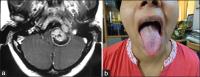 Figure 3: (a) Left side hypoglossal schwannoma. Contrast magnetic resonance imaging axial image
demonstrates enhancing lesion with central necrosis arising from left hypoglossal
nerve extending to left cerebellopontine angle cistern. (b) Clinical photograph of
left hypoglossal schwannoma demonstrating ipsilateral tongue atrophy and deviation
Figure 3: (a) Left side hypoglossal schwannoma. Contrast magnetic resonance imaging axial image
demonstrates enhancing lesion with central necrosis arising from left hypoglossal
nerve extending to left cerebellopontine angle cistern. (b) Clinical photograph of
left hypoglossal schwannoma demonstrating ipsilateral tongue atrophy and deviation
 Figure 4: (a) Left side jugular foramen schwannoma. Contrast magnetic resonance imaging axial
image demonstrates enhancing lesion with central necrosis arising from the left jugular
foramen. (b) Postoperative contrast magnetic resonance imaging axial image demonstrates
no residual tumor
Figure 4: (a) Left side jugular foramen schwannoma. Contrast magnetic resonance imaging axial
image demonstrates enhancing lesion with central necrosis arising from the left jugular
foramen. (b) Postoperative contrast magnetic resonance imaging axial image demonstrates
no residual tumor
In our series of 26 patients of jugular foramen schwannomas, the male-to-female ratio
1.1:1 and the median age was 45.5 years. The hearing loss (58%) was the predominant
symptoms followed by cerebellar sign (38%) and trigeminal nerve dysfunction (4%).
The most common approach used was retrosigmoid approach. Total excision was achieved
in 62% of patients and postoperative facial function was preserved in 73% of patient.
There was no mortality. Treatment strategy of jugular foramen tumor depends on the
age of patients, size of tumors, and lower cranial nerve involvement [[41]] [[Flow chart 1]].
 Flow Chart 1: Treatment strategy in jugular foramen tumors
Paragangliomas (glomus tumors)
Paraganglioma is a benign but locally aggressive tumor and destroys the petrous bone
to enlarge to the CPA. Symptoms include pulsatile tinnitus, headache, or hearing loss.
On otoscopy, a red pulsatile mass can be seen behind the tympanic membrane with increased
vascularization of the floor of the external auditory canal. Most patients have conductive
hearing loss but with tumors that occupy the CPA either a mixed loss or profound sensorineural
loss is not uncommon. Arteriography demonstrates the extent of the tumor and source
of its blood supply.[[1]],[[2]] On CT, tumors appear well defined with adjacent bone erosion and marked enhancement
after contrast injection. Paraganglioma has a characteristic “salt and pepper” appearance
on both T1- and T2-weighted MRI images because of intratumoral blood vessels and hemorrhages.
The tumors enhance intensely after gadolinium administration.[[1]],[[2]] Treatment options include radiosurgery or surgery.
Many centers have moved away from microsurgical resection in favor of stereotactic
radiosurgery for such lesions because of the risk of lower cranial nerve dysfunction.
Stereotactic radiation therapy is also a primary option for lesions with more limited
extension. A newer paradigm for these lesions is dictated by patient symptomatology.[[42]] When pulsatile tinnitus and conductive hearing loss are bothersome to a patient,
a targeted debulking of the middle ear and mastoid component may be undertaken. If
indicated, based on the growth of the remaining lesion, adjuvant radiotherapy may
be pursued. Unlike when complete resection is planned, the authors have found preoperative
embolization is not needed when only a limited debulking is planned. In our series,
the five cases of glomus tumors were operated by far lateral intralabyrinthine approach
[[Figure 5]]a and [[Figure 5]]b.
 Figure 5: (a) Right side glomus tumor. Contrast magnetic resonance imaging axial image demonstrates
enhancing lesion with central necrosis arising from right jugular foramen "salt and
paper appearance." (b) Postoperative contrast magnetic resonance imaging axial image
demonstrates no residual tumor
Figure 5: (a) Right side glomus tumor. Contrast magnetic resonance imaging axial image demonstrates
enhancing lesion with central necrosis arising from right jugular foramen "salt and
paper appearance." (b) Postoperative contrast magnetic resonance imaging axial image
demonstrates no residual tumor
Endolymphatic sac tumors
ELSTs are uncommon tumors and most often associated with von Hippel–Lindau (VHL) disease,
although approximately 20% of cases result from sporadic mutations. Nevoux et al.
have posited that sporadic tumors behave quite differently from those associated with
VHL.[[43]] VHL may affect other organ systems, including cysts throughout the urogenital system,
hemangioblastomas of the central nervous system (that may also present in the CPA),
and certain malignancies. A majority of patients with VHL inherit this through an
autosomal dominant pattern from mutations on chromosome 3. Pathologically, ELSTs are
benign low-grade tumors but may be locally aggressive including erosion into the otic
capsule. They are present in 10% of patients with VHL. They may cause progressive
hearing loss as well as tinnitus and vertigo.[[44]] Characteristic imaging findings include T1 hyperintensity with heterogeneous enhancement
after gadolinium administration. CT may also be helpful in demonstrating a destructive
lesion centered at the posterior petrous temporal bone in the region of the vestibular
aqueduct. Calcifications may be present as well [[Figure 6]]. Histologically, these lesions are characterized as papillary adenomatous lesions,
and in some cases, are classified as adenocarcinomas.[[45]] Early gross total resection is advocated because of the high risk of recurrence
when a subtotal resection is undertaken. In addition, larger lesions pose increased
risk to postoperative facial nerve function. With larger lesions, preoperative embolization
may be prudent because these tumors may be supplied by branches of the external carotid
or vertebral arteries.[[30]] In cases where complete surgical resection is not possible or in poor surgical
candidates, data suggest a role for adjuvant radiation therapy or primary stereotactic
radiotherapy.[[44]],[[45]] Small, less-extensive lesions may be approached from a retrolabyrinthine approach,
allowing access to the endolymphatic sac for complete resection of these lesions.
This approach also allows for preservation of hearing, as Kim et al. demonstrated
in maintaining stable pure-tone average in 30 of 31 ears operated through this approach.[[46]] Depending on a patient's preoperative hearing status, other approaches, including
the translabyrinthine route, may be used.[[47]] In our series, all four patients of ELST were operated by intralabyrinthine approach
[[Figure 6]]a and [[Figure 6]]b.
 Figure 6: (a) Right side endolymphatic sac tumor. Contrast magnetic resonance imaging coronal
image demonstrates heterogeneous enhancement with lobulated lesion. (b) Postoperative
contrast computed tomography scan of the brain demonstrates no residual tumor
Figure 6: (a) Right side endolymphatic sac tumor. Contrast magnetic resonance imaging coronal
image demonstrates heterogeneous enhancement with lobulated lesion. (b) Postoperative
contrast computed tomography scan of the brain demonstrates no residual tumor
Choroid plexus papilloma
Choroid plexus papilloma is a rare tumor. They represent <1% of intracranial neoplasms.
Derived from the epithelial cells of the choroid plexus, they have the same microstructure
of normal choroid plexus when benign. Most often affecting children, they arise typically
in the lateral ventricles. In adults, the most common site is the fourth ventricle.
Malignant forms are very rare. Patients with choroid plexus papilloma may present
with signs of a CPA tumor and if of significant size, raised intracranial pressure
is almost always present. CPA choroid plexus papilloma should be evaluated using MRI.
Their prognosis is excellent when total surgical excision is possible. Radiotherapy
has been employed when surgery is not possible, but the results are variable.[[2]],[[48]],[[49]]
Choroid plexus papilloma has been reported both extending from the 4th ventricle through
the foramen of Luschka and primarily in the CPA. Fourth ventricular tumors and tumors
primarily in the CPA tend to present in adults.[[50]] These are benign lesions and can be managed solely with surgery. Less common are
more aggressive lesions – so-called atypical papilloma and carcinomas.[[31]] Overall, 6% of papilloma recur and need repeated surgical intervention.[[51]] In the pre-MRI era, a series of 12 choroid plexus papilloma of the CPA were resected
either through midline approach through the cerebellomedullary fissure or a retrosigmoid
approach. Seven of those patients improved but two patients recurred.


